Building in Ontario presents a unique set of challenges. Between the 2024 updates to the Ontario Building Code (OBC)—which came into effect January 1, 2025—and a construction season often interrupted by freezing temperatures, architects and developers are searching for smarter ways to close the building envelope.
Enter Insulated Metal Panels (IMPs). Once reserved for cold storage, these “sandwich panels” have moved into the mainstream of high-end architectural design.
At NORTEM®, we bring years of experience and a portfolio of 500+ commercial and high rise projects across Toronto and Canada. In this guide, we provide a technical deep-dive into the costs, benefits, and strategic advantages of systems like Kingspan and Vicwest.
What is an IMP Panel? The “4-in-1” Engineering Marvel
An Insulated Metal Panel is a composite cladding component consisting of two layers of coated metal (usually high-gauge G90 galvanized steel) with a rigid foam core.
The reason IMPs are dominating the Ontario market is their integrated design. Traditional wall assemblies require four different steps and often four different subcontractors. An IMP panel combines all four into a single pass.
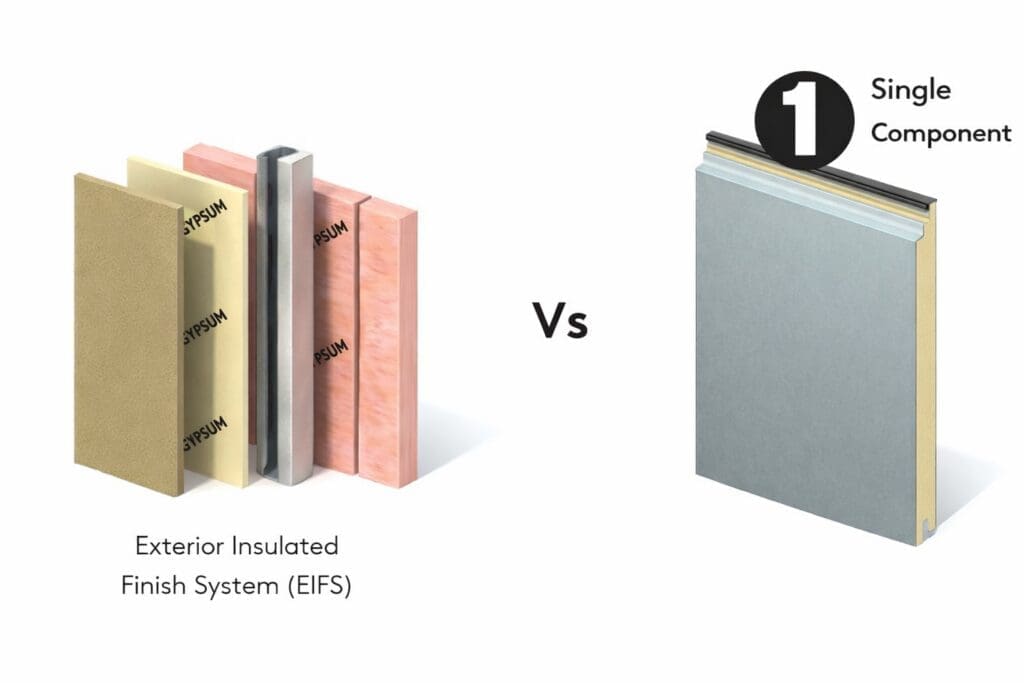
NORTEM® Field Note: On a recent commercial project in North York, our team achieved “Dry-In” (sealing the building from weather) 40% faster than the original masonry schedule allowed. This enabled interior trades to start work in mid-February instead of waiting for the spring thaw.
PIR vs. Mineral Wool: Choosing the Right Core
Not all panels are equal. The “insulation” determines your building’s fire safety and thermal performance.
1. PIR (Polyisocyanurate) & QuadCore®
Systems like Kingspan QuadCore® are the industry leaders for thermal efficiency. (QuadCore® Technology Spec)
- Thermal Performance: Provides up to R-8.2 per inch.
- Compliance: Ideal for meeting OBC Supplementary Standard SB-10 requirements for energy efficiency.
2. Mineral Wool (Fiber) Cores
If your project is located close to a property line or requires a high Fire-Resistance Rating (FRR), mineral wool is mandatory.
- Fire Safety: Non-combustible and can provide up to a 3-hour fire rating (tested to CAN/ULC-S101).
- Acoustics: Denser than foam, offering a Sound Transmission Class (STC) of 25–32, making it the best choice for projects near the 401 or Pearson Airport.
Architectural Versatility: Breaking the “Industrial” Stigma
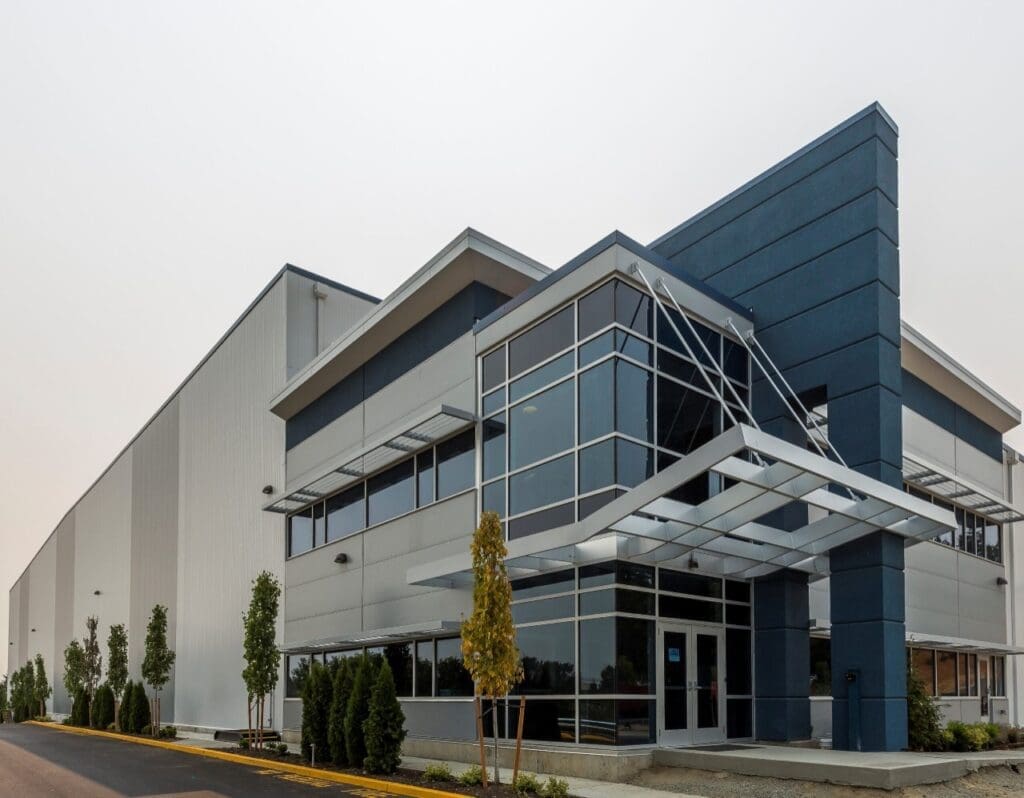
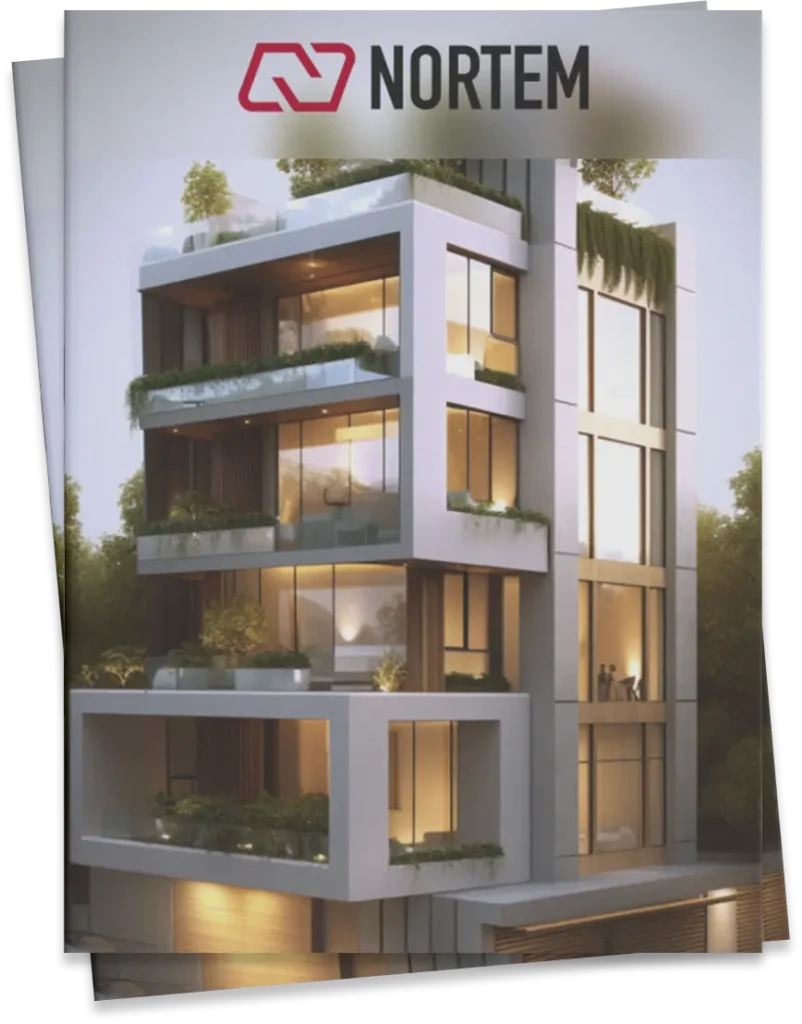
Modern IMPs are no longer just flat grey slabs. Architects in Toronto are now using them to mimic premium materials at a fraction of the cost.
- Textured Finishes: Embossed surfaces provide a “stucco” look that hides imperfections and reduces glare.
- Wood-Look Finishes: High-definition print technology allows for cedar or walnut wood-grain finishes that are non-combustible and require zero maintenance.
- Profile Variety: From Micro-Rib to Shadowline, these profiles create play with light and shadow, turning a simple facade into a dynamic architectural statement.
Beating the “Canada Winter” Construction Delay
In Toronto, the “winter tax” on construction is real. Traditional “wet” trades (like masonry or EIFS) often stop in sub-zero temperatures because mortar and adhesives cannot cure.
IMPs offer a “Dry” Construction Method:
- No Cure Time: There are no mortars that can freeze.
- Instant Thermal Barrier: As soon as panels are fastened, you can turn on the building’s permanent heat, saving thousands in temporary heating costs for interior drywall and electrical trades.
| Feature | Traditional Built-Up Wall | NORTEM® IMP System |
|---|---|---|
| Trades Required | 3 to 4 | 1 (Nortem) |
| Winter Sensitivity | High (Temperature Dependent) | Low (All-Weather) |
| Thermal Bridging | Common at Studs | Eliminated at Joints |
How Much Do Insulated Metal Panels Cost in Canada? (2025-2026)
To ensure project feasibility, we track current Ontario market rates for materials and specialized labor.
- Material Price: $15 – $28 CAD per sq. ft. (varies by thickness and finish).
- Total Installed Cost: Typically $35 – $60 per sq. ft. in the GTA.
Strategic ROI: While the material price is higher than basic metal siding, the Labor Savings are massive. By reducing the number of trades on-site, you reduce site management overhead and scaffolding rental durations.
Addressing the “Disadvantages”: Honesty Builds Trust
We believe in honest consulting. Here are the three main technical concerns with IMPs:
- Oil Canning: Slight waviness in flat metal. Our Solution: We recommend striated or micro-rib profiles and use thermal spacers to allow for the expansion and contraction common in Ontario’s -30°C to +30°C temperature swings.
- Fastener Precision: Because IMPs are rigid, your steel framing must be within strict tolerances (typically L/600). Our Process: We conduct a laser-level survey of the substrate before a single panel is delivered to prevent telegraphing of frame imperfections.
- Vapor Barrier Continuity: The seal is only as good as the installer. If the tongue-and-groove joint isn’t seated perfectly, moisture can bypass the seal.
Sustainability: Toronto Green Standard (TGS)
With the Toronto Green Standard (TGS) Version 4 now in effect, IMPs are a vital tool for achieving “High Performance” building labels.
- Net-Zero Ready: Our systems eliminate thermal bridging, a requirement for Tier 3 and 4 TGS compliance.
- Recycled Content: Most panels we supply are made from up to 30% recycled steel and are 100% recyclable at the end of their lifecycle.
Request a Technical Quote | View Our IMP Project Gallery
Technical Review by the NORTEM Engineering Team. Last Updated: January 2026.